SendGrid review (2026): pricing, and why not for cold email
SendGrid pricing verified: 60-day free trial, Essentials from $19.95 a month, Pro from $89.95. Why a transactional relay is the wrong tool for cold email.
SendGrid at a glance
Facts checked Oct 6, 2026 on twilio.com
- Price
- From $19.95 per month for Essentials at 50,000 emails a month; free trial of 100 emails a day for 60 days
- Pricing model
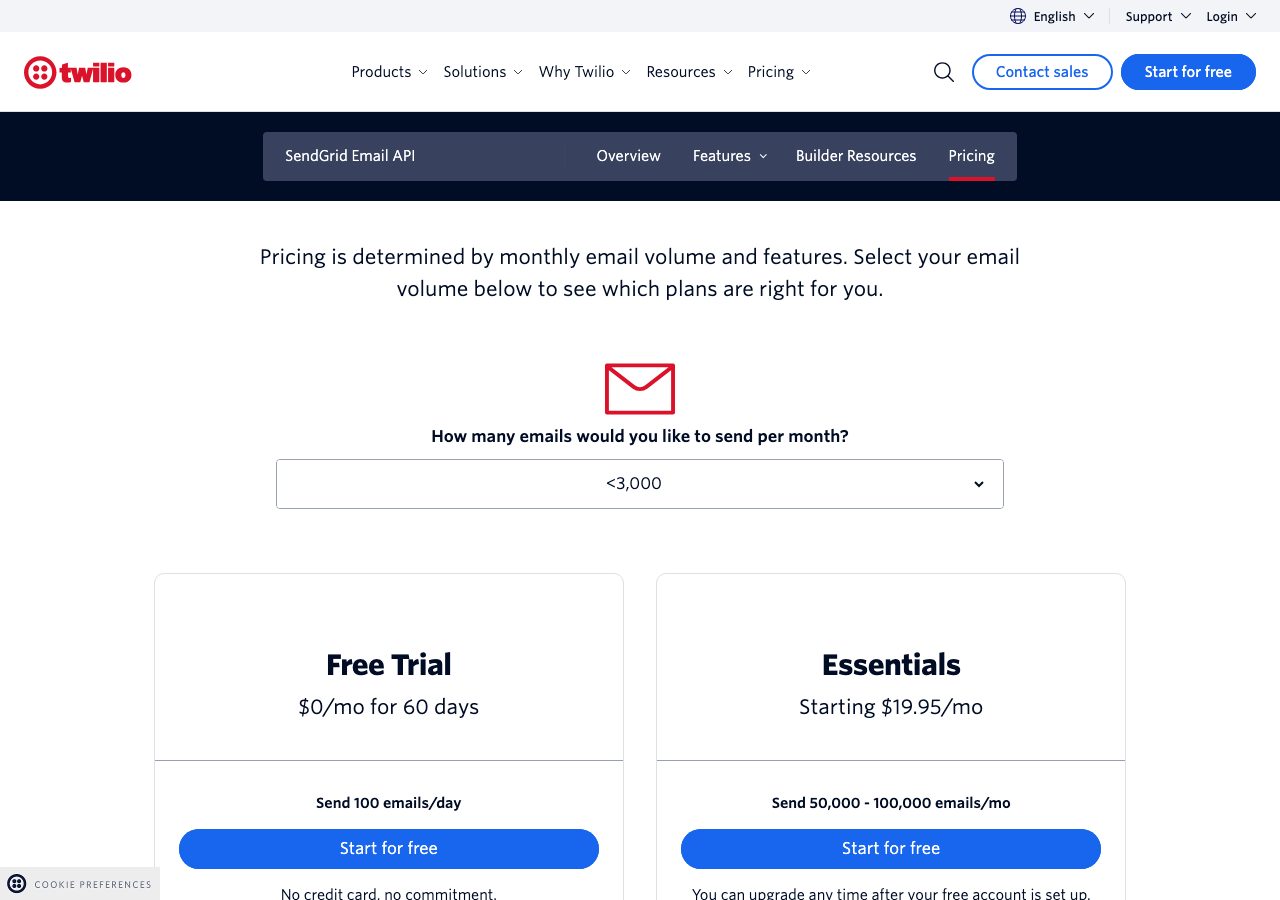
- Priced by monthly volume and features. Free trial: 100 emails a day for 60 days, no card. Essentials: from $19.95 a month for 50,000 emails, up to 100,000. Pro: from $89.95 a month for 100,000 emails, up to 2.5 million, with dedicated IP addresses, IP pooling, automated IP warmup, 2,500 free email validations and 7 days of statistics history. Premier: custom pricing above that. Taxes and overages apply, and the exact price depends on the volume you select on the pricing page.
- Minimum order
- None
- Free trial
- 60 days at 100 emails a day, no card
- Billing
- Monthly by volume tier, with overages; dedicated IPs included on Pro and Premier and more can be bought
- Setup time
- Minutes for an API key and domain authentication
- DNS setup
- You add SendGrid's CNAME records to authenticate each sending domain; SPF and DKIM are handled through them
- IP location
- Shared IP pools on Essentials; dedicated IPs on Pro and Premier
- Warmup
- Automated warmup for dedicated IPs on Pro and Premier; there are no mailboxes to warm
- Replacements
- Not applicable
- Domains
- Bring your own and authenticate each one with DNS records
- Integrations
- SMTP relay, REST API, Event Webhook, Inbound Parse, Email validation API
Best for: Product and marketing teams sending transactional and opted-in email through an API at scale.
Not for: Cold outreach of any kind; use real mailboxes with warmup and a sequencer instead.

SendGrid pricing
Published prices as of Oct 6, 2026 from their pricing page. Prices change; check before you buy.
| Plan | Price | What you get | Notes |
|---|---|---|---|
| Free Trial | $0 for 60 days | 100 emails a day, SMTP and API, webhooks | No card |
| Essentials | From $19.95 a month | 50,000 to 100,000 emails a month, shared IPs | 3 days of statistics |
| Pro | From $89.95 a month | 100,000 to 2.5 million emails, dedicated IPs, IP warmup, 2,500 validations | 7 days of statistics |
| Premier | Custom | Higher volumes, 5,000 validations | Contact sales |
- Free Trial$0 for 60 days
100 emails a day, SMTP and API, webhooks
No card
- EssentialsFrom $19.95 a month
50,000 to 100,000 emails a month, shared IPs
3 days of statistics
- ProFrom $89.95 a month
100,000 to 2.5 million emails, dedicated IPs, IP warmup, 2,500 validations
7 days of statistics
- PremierCustom
Higher volumes, 5,000 validations
Contact sales
What SendGrid does well
- Reliable transactional delivery at scale, over SMTP or the API, with event webhooks for opens, bounces and complaints and an inbound parse webhook for replies to your app.
- A 60-day free trial of 100 emails a day with no card, which is generous for testing an integration.
- Dedicated IPs with automated warmup and IP pooling on Pro, so your transactional reputation is yours alone.
- An email address validation API with 2,500 free validations on Pro and 5,000 on Premier.
- Twilio-grade documentation, SDKs in every major language, and a public status page.
Where it falls short
- It is a relay, not a mailbox: there is no inbox for prospects' replies, no Google or Microsoft account behind the message, and no sender reputation borrowed from those providers.
- Cold email to people who never opted in produces the complaints and bounces its compliance system watches for; Twilio's acceptable use policy requires consent wherever the law requires it and the honouring of opt-outs.
- Pricing depends on volume and features with overages, and statistics history is only 3 days on Essentials and 7 on Pro.
- Shared IP pools on Essentials put your mail next to every other sender on the pool.
- The sendgrid.com site has merged into twilio.com and some policy pages now return 404, so check the current terms inside the console before relying on them.
PureMail score for SendGrid
Five criteria, 1 to 5 each, scored on what SendGrid publishes. How we score.
3.2 / 5
- Price and value
- 4 / 5
- Setup and control
- 4 / 5
- Deliverability foundations
- 4 / 5
- Terms and support
- 3 / 5
- Fit for cold email
- 1 / 5
Published prices, effective cost per mailbox at 10, 30 and 100, no hidden fees. Unpublished pricing scores 1.
Time to first send, DNS automation, domain options, sequencer connection, ownership of domains and mailboxes.
Mailbox type and its inherited reputation, IP policy, warmup path, replacement policy for blocked mailboxes.
Minimum order, billing flexibility, refund and cancellation terms, support channel and hours.
Built and permitted for outbound, integrations with sequencers, warmup and verification tools.
What SendGrid is
SendGrid is Twilio’s email delivery service: an API and an SMTP relay that your application or marketing platform uses to send mail at scale. It handles transactional messages such as receipts, password resets and notifications, and opted-in marketing campaigns through a sister product. The sendgrid.com site has now merged into twilio.com, where the Email API, the documentation and the console live. It is a good product for what it is built for, which is why it appears in so many searches that also mention cold email, and why it belongs in this directory with a clear answer: it is the wrong tool for that job.
SendGrid pricing
Pricing is set by monthly volume and features, and the pricing page recalculates when you pick a volume. The free trial allows 100 emails a day for 60 days with no card; the old permanent free plan is gone. Essentials starts at $19.95 a month for 50,000 emails and runs to 100,000 on shared IP pools, with SMTP and API access, event webhooks and 3 days of statistics history. Pro starts at $89.95 a month for 100,000 emails and runs to 2.5 million, adding dedicated IP addresses with automated warmup, IP pooling, 2,500 free email address validations and 7 days of statistics. Premier is quoted for higher volumes and includes 5,000 validations. Taxes and overages apply.
Why a transactional relay is the wrong tool for cold email
Three reasons, and they apply to every relay, not just SendGrid. First, policy. Twilio’s acceptable use policy prohibits violating laws and industry standards that require consent before sending or that require opt-out requests to be honoured. Cold outreach to people who never asked for your mail sits on the wrong side of that line in many jurisdictions and, where it is lawful, still produces the behaviour the policy is designed to catch.
Second, mechanics. Relays measure complaint rates and bounce rates across everything you send, because mailbox providers judge their IPs by those numbers. A cold list pushes both above the thresholds that Gmail, Microsoft and the relay itself tolerate, so reputation falls, mail lands in spam, and the account is throttled or suspended. On Essentials you share an IP pool with other customers, so their problems become yours and yours become theirs.
Third, the product. Cold email is a conversation: a prospect replies, and the reply has to land in a mailbox someone reads. SendGrid sends from a domain you authenticate, but there is no inbox behind it; replies need an inbound parse webhook and your own handling. There is also no Google or Microsoft account, and therefore none of the sender reputation those providers lend their own tenants, which is the quiet advantage real mailboxes have.
What to use instead
The model that works is real mailboxes at a real provider, warmed up, spread across several domains, connected to a sequencer and held to conservative daily volumes. Every tool in our inbox provider category follows it, and it is what PureMail’s warmed Google Workspace and Microsoft 365 inboxes are for. Keep SendGrid for the transactional mail your product sends, and if you want a relay for marketing to people who opted in, Mailgun and Postmark are the usual alternatives, alongside Amazon SES.
Who SendGrid is for
Product and marketing teams that send transactional and opted-in email through an API at scale, want dedicated IPs with managed warmup, and need webhooks for delivery events. For cold outreach, look elsewhere.
SendGrid alternatives we have reviewed
Mailgun
Sinch's email API and SMTP relay: free 100 emails a day, Basic $15 a month, Foundation $35 for 50,000, Scale from $90 with a dedicated IP. Not for cold email.
Postmark
ActiveCampaign's transactional email service: free 100 emails a month, then $15 to $18 for 10,000 by plan, with separate broadcast streams. Not for cold email.
Mailtrap
Transactional email API and SMTP service from Railsware: 4,000 emails a month free, then $15 for 10,000 up to $1,250 for 2.5 million; unsolicited email barred.
SendGrid FAQ
How much does SendGrid cost?
As of 6 October 2026, the Email API has a 60-day free trial of 100 emails a day with no card. Essentials starts at $19.95 a month for 50,000 emails and covers up to 100,000. Pro starts at $89.95 a month for 100,000 emails and covers up to 2.5 million, with dedicated IPs, automated IP warmup and 2,500 free email validations. Premier is quoted. Taxes and overages apply, and the exact figure depends on the monthly volume you pick.
Can I send cold email with SendGrid?
Not in practice. SendGrid is a transactional relay built for mail recipients asked for, and Twilio's acceptable use policy requires consent wherever the law requires it and the honouring of opt-outs. Cold outreach to people who never opted in generates the spam complaints and bounces that relays watch for, and accounts that produce them are throttled or suspended. There is also no inbox to receive replies in.
What happens if I try anyway?
Relays measure complaint and bounce rates across your sending. Cold lists push both above the thresholds mailbox providers and SendGrid tolerate, your reputation drops, mail starts landing in spam and the account is reviewed. You also lose the thing that makes cold email work, a real mailbox at a real provider that a prospect can reply to.
What should I use for cold email instead of SendGrid?
Real mailboxes on Google Workspace or Microsoft 365, warmed up and connected to a sequencer, spread across several domains at conservative daily volumes. That is the model every tool in our inbox provider category follows, and it is what PureMail sells. Keep SendGrid for the transactional mail your product sends.
Does SendGrid still have a free plan?
No. The permanent free plan has been replaced by a 60-day free trial of 100 emails a day with no card required. After 60 days you choose Essentials, Pro or Premier.
Sources
Disclosure: PureMail sells Google Workspace and Microsoft 365 inboxes and competes with some tools in this directory. We do not assign star ratings and we do not take payment for placement. Spotted an error? Email [email protected] and we will correct it within a week.
More tools in the directory
Mailgun
Sinch's email API and SMTP relay: free 100 emails a day, Basic $15 a month, Foundation $35 for 50,000, Scale from $90 with a dedicated IP. Not for cold email.
Mailtrap
Transactional email API and SMTP service from Railsware: 4,000 emails a month free, then $15 for 10,000 up to $1,250 for 2.5 million; unsolicited email barred.
Postmark
ActiveCampaign's transactional email service: free 100 emails a month, then $15 to $18 for 10,000 by plan, with separate broadcast streams. Not for cold email.
Setup guides from PureMail
How to Set Up SPF, DKIM and DMARC for Cold Email Domains
Step-by-step SPF, DKIM and DMARC setup for cold email domains on Google Workspace and Microsoft 365, plus the mistakes that quietly kill deliverability.